
| Symptom in the draft | First action | Planning use |
|---|---|---|
| Vision and mission read like the same sentence | Rewrite the vision as a future end state and the mission as what the company does now | The vision guides direction and design. The mission guides execution today. |
| The mission could describe any competitor | Add what the company does and how it differs from competitors | Gives teams a test for which work fits the mission and which does not. |
| Nobody can repeat the mission from memory | Cut it to a short sentence that is easy to memorize | A statement people can recall is one they can use in everyday choices. |
| The values list keeps growing | Limit the list to five or six values | Keeps the values usable as the foundation for vision and mission. |
| The statements feel out of date | Revisit vision and mission so they stay fresh and relevant | Build the review into strategic planning rather than treating it as a separate task. |
| Objectives do not connect to the vision | Align objectives with the vision and involve people from all parts of the company | Keeps targets tied to the direction the company has chosen. |
The definitions and limits in the table draw on N2Growth’s comparison of vision and mission and Paycor’s guide to values, mission, vision and goals.
A vision vs mission statement comparison comes down to time. The vision describes the future the company wants to reach; the mission describes what it does now. Core values sit beneath both.
These statements are one part of strategic planning, and the business strategy frameworks guide shows where they sit among the other planning tools. Find the symptom above that matches the draft, then use the matching section below to fix it.
Vision, mission and values: the decision each one guides
Vision statements are design-oriented and mission statements are execution-oriented, according to N2Growth. The same source describes the vision as the end game and the mission as the road map that takes the company there. Core values are the third layer. Paycor puts it simply: core values are about what the company is, while mission and vision describe where it is going.
The practical way to keep the three apart is to ask which decision each one guides. N2Growth’s ordering gives the logic: values underpin the vision, the vision dictates the mission, and the mission determines strategy.
- Vision guides direction. It answers where the company is heading and what it wants to become.
- Mission guides present activity. It answers what the company does now and for whom, so it decides which work is in scope today.
- Values guide conduct. They describe what the company is, so they apply when a choice about behaviour has to be made under pressure.
Vision: the decision about direction
A vision states the position the company wants to reach. Ford’s publicly stated vision, as quoted by Paycor, is “To become the world’s leading consumer company for automotive products and services.” It names a future position rather than a current activity.
Symptom: the vision reads like a to-do list or a description of today’s services. Fix: move every verb that describes current work into the mission, and keep only the future position in the vision. A vision that begins with “To become” and ends with a recognisable arena is hard to confuse with a mission.
Mission: the decision about today’s work
A mission is what the company does now. Google’s publicly stated mission, again quoted by Paycor, is “To organize the world’s information and make it universally accessible and useful.” It names an activity and an outcome, and a team can test a project against it.
Symptom: the mission talks about aspiration and nothing the company does this year. Fix: state the present activity first and the beneficiary second. Paycor’s advice is that a mission should be specific enough for people to understand what the company does and how it differs from its competitors.

Choosing core values
Core values are the first layer to settle, because N2Growth recommends basing everything upon them before writing vision and mission. They describe what the company is, so they should be written before any statement about where it is going.
How many values to keep
Paycor advises limiting the list to five or six. That is a recommendation for usability, not a rule of nature. A longer list tends to blur into general virtues, and people cannot name the values they are meant to act on.
Symptom: the shortlist contains words any company could claim, such as quality or excellence. Fix: keep a value only if it can be turned into a behaviour a colleague would recognise, and merge values that produce the same behaviour.
Making the shortlist visible
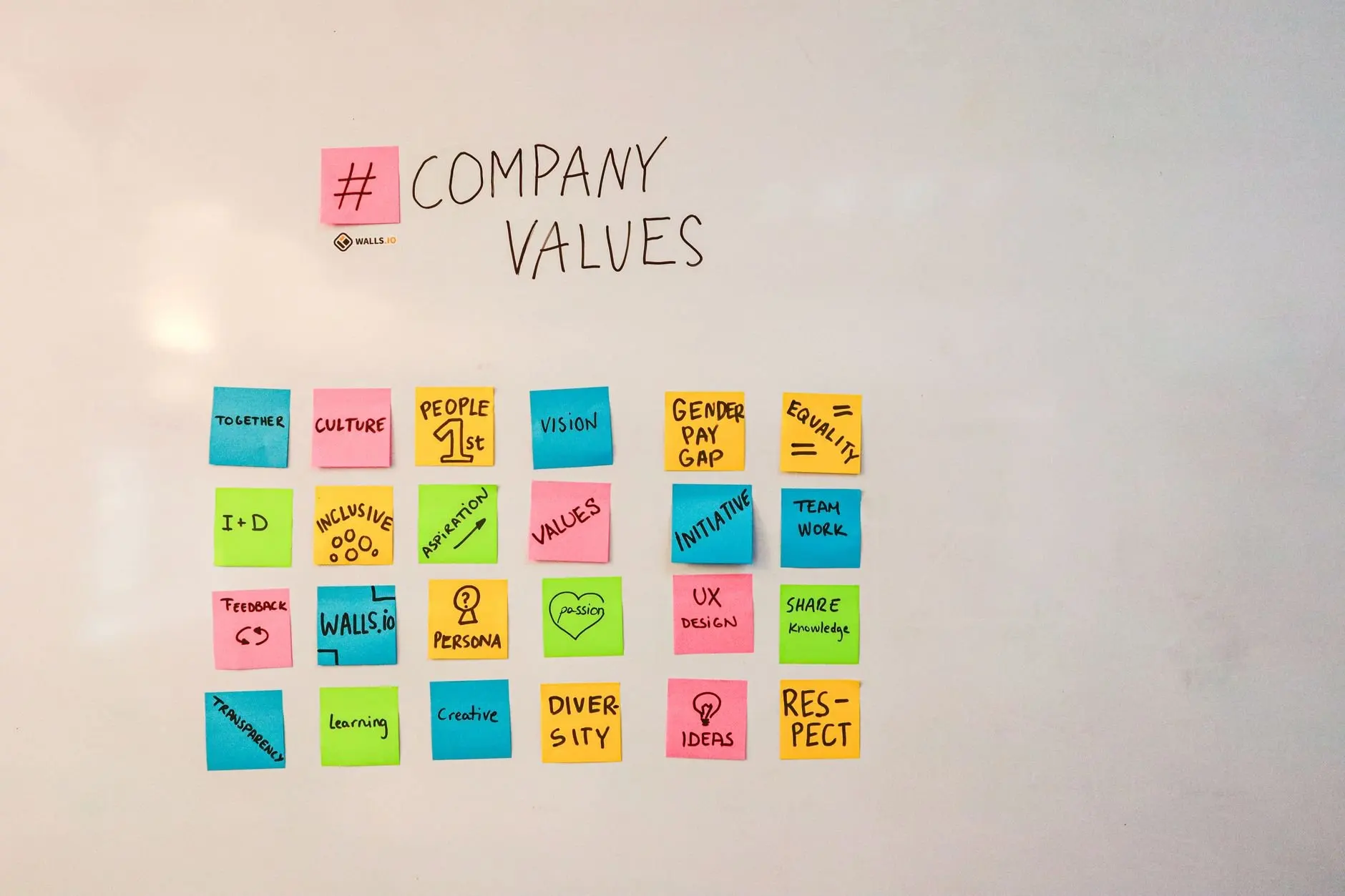
Values only guide conduct if people see them. Put the final wording where daily work happens, such as team rooms, onboarding material and review forms, and phrase each value as a short behaviour rather than a single abstract noun.
Rewriting weak wording
The examples below use a hypothetical independent bakery. They are illustrations of the rewrite technique, not statements from a real company.
Weak mission to specific mission
- Before: “To be the best provider of quality solutions.” Any competitor could say this, so it fails the difference test.
- After: “To bake fresh bread for neighbourhood cafés and shops, delivered on the day it is baked.” It names the activity, the customer and a feature a rival might not match.
Weak vision to clear vision
- Before: “To grow and do great things.” It has no destination, so it cannot guide any decision about direction.
- After: “To become the leading bakery supplier for independent cafés across the region.” Like Ford’s wording, it names a position the company has not yet reached.
Weak values to usable values
- Before: a list of generic words, such as integrity, excellence, innovation, passion, teamwork, quality and trust.
- After: a shorter list, each with its behaviour attached, such as “Honesty: tell a customer about a delay before they ask.” Fewer, more specific values are easier to recall and act on.
Check each rewrite against the same standard. Paycor’s guidance is to keep the mission short, sweet and easy to memorize, so read the result aloud and cut any phrase that makes it hard to repeat.
Fill-in templates
Templates work best as a first draft that a team then edits. Complete each blank with a concrete answer, not a category word.

- Mission template: “[Company] [does what] for [whom], [in the way that differs from competitors].” The present tense keeps it tied to current activity.
- Vision template: “To become [future position] for [arena or audience].” It should describe a state the company has not yet reached.
- Value template: “[Value]: [behaviour people would see].” Write five or six of these, no more.
Before finalising, run three checks. Does the mission describe current work, and does the vision describe something still to be achieved? Could a competitor adopt the mission word for word? Can a colleague say the mission without looking at it? A “yes” to the second or a “no” to the third sends the draft back for another pass.
Keeping the statements connected to planning
Statements that sit on a wall and never touch decisions tend to feel generic. Paycor recommends that objectives set during planning align with the vision statement and that representatives from all parts of the company join the strategic planning conversations. Those people are the internal stakeholders who will have to act on the statements.
For key results under each objective, Paycor suggests keeping the number modest: two to four are enough. A short set of results tied to the vision keeps organizational purpose visible in the targets teams actually track.

Reviewing the wording
N2Growth states that both the vision and the mission need to be kept fresh and relevant, so neither is a constant to write once and forget. Treat the review as part of each planning cycle. If the mission no longer matches what the company does, or the vision has been reached, rewrite the statement.
Strategy choices follow the statements. For how a company then positions itself against rivals, see porter’s generic strategies, and for how the offer, customers and revenue fit together, read what is the business model canvas.
Frequently asked questions
| Question | Answer |
|---|---|
| What is the difference between a vision and a mission statement? | A vision is the bigger-picture future the company wants; a mission is the present-focused statement of what it does now, according to N2Growth. |
| How many core values should a company have? | Paycor suggests five or six, so each one can be remembered and acted on. |
| How often should these statements be revisited? | No fixed interval is given by the sources here, only that they must stay fresh and relevant. Tying the review to strategic planning is a sensible habit. |
| What makes a mission statement useful rather than generic? | It is specific about the company’s activity and how it differs from competitors, and short enough to remember. |