

A small firm with a crowded wish list of tools should choose technology for business innovation by starting from one business need and testing each system in business context, because a system can work well technically and still fail.
For the AI question behind many first projects, see how is artificial intelligence used in business. The sections below place AI beside automation, data, cloud and software choices, so each technology is judged by the decision it supports.
- Need before tool. CIO’s innovation guidance warns that systems can work well and still fail because they don’t meet a business need. Write the need down before any vendor demonstration.
- Size changes the route. A peer-reviewed study in the European Research Studies Journal finds that Industry 4.0 technologies have a different impact on different enterprises, depending on size and resources.
- Buy, partner or build is a business call. It depends on how central the capability is to what the firm sells, not on how interesting the engineering is.
Starting routes by business goal
Most readers arrive with a goal rather than a technology in mind. The routes below match four common goals to an ordered path through this guide, so the first purchase answers a stated problem. Each route ends with a check that belongs to the business, not to the vendor.
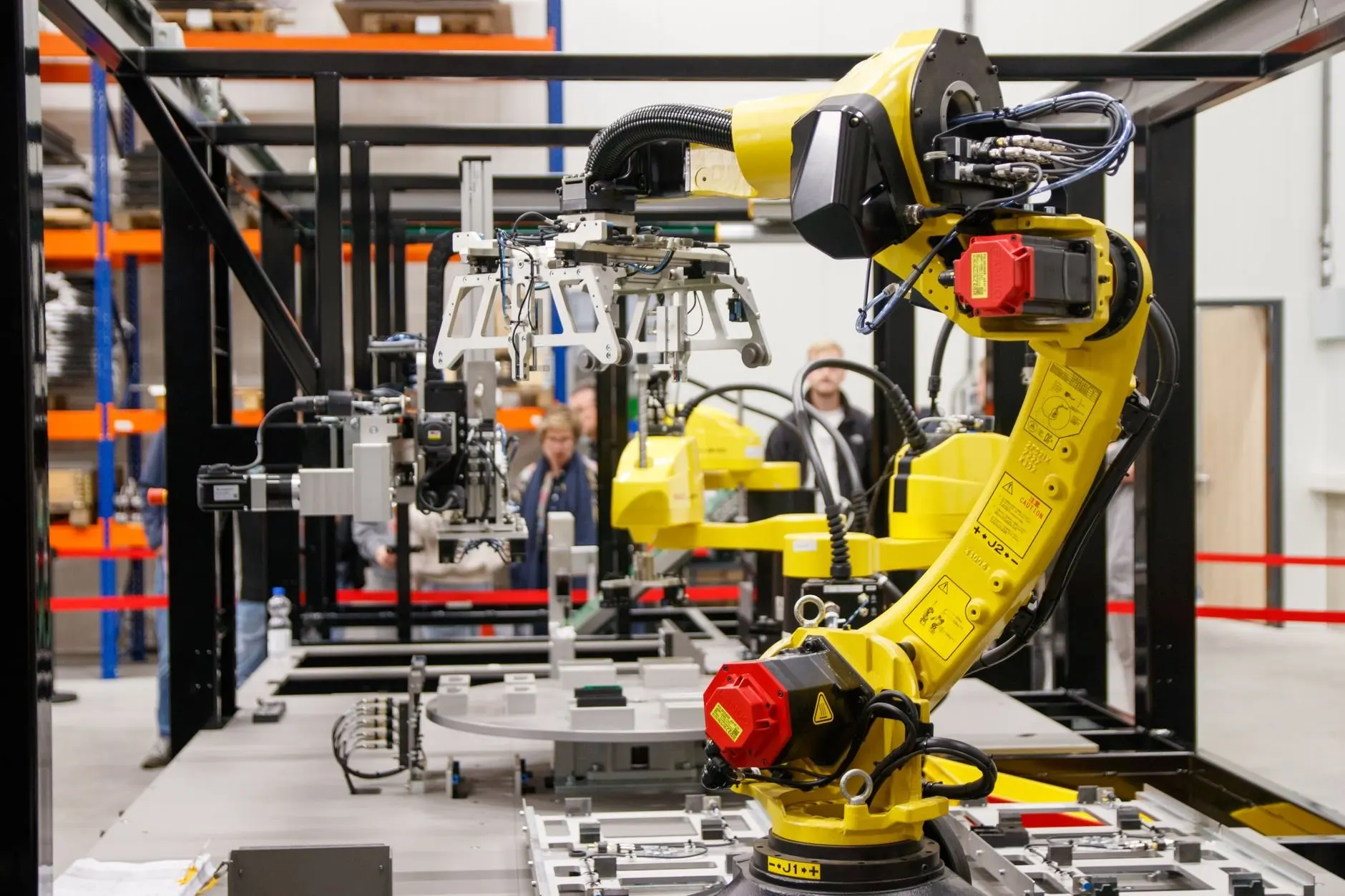
Goal: less repetitive manual work
- List the tasks that follow fixed rules and recur every day or week.
- Read the automation section below to separate rule-based task automation from physical or workflow automation.
- Pilot on one process with a named owner.
- Judge the pilot by whether staff time moved to work that needs judgement, not by whether the software ran.
Goal: better decisions from information the firm already holds
- Name the decision that is currently made on instinct or late information.
- Find where the relevant records sit and who maintains them.
- Read the data and AI sections to decide whether reporting is enough or prediction is needed.
- Check that the people who will act on the output were involved in framing the question.
Goal: a new product, service or customer experience
- Describe the customer problem in plain language before choosing any platform.
- Read the digital transformation and build-or-buy sections together, because the way a firm sources the software shapes how quickly it can change the offer.
- Test the idea with real customers in a limited setting.
- Keep the pilot narrow enough that it can be stopped without damaging the core business.
Goal: replace ageing systems
- Map what the old system does that the business still depends on.
- Read the build-or-buy and infrastructure sections to compare replacement with gradual change.
- Decide what must keep running during the switch.
- Plan the security review alongside the migration, not after it.
What digital transformation means in a business
Digital transformation in business is the use of digital technology to change how a company operates and serves customers, rather than simply moving existing paper steps onto screens. The test of whether it has happened is a changed process or offer, not a new piece of software. The dedicated guide to digital transformation in business covers the concept in more depth, and a firm ready to plan can follow how to create a digital transformation strategy.
Two ideas keep the term practical. First, transformation is a sequence of specific decisions, each tied to a process, a customer group or a cost the firm wants to change. Second, its effect is uneven across firms. The study published in the European Research Studies Journal (2021, volume XXIV, pages 492-505) says Industry 4.0 technologies have a different impact on different enterprises depending on size and resources. A transformation plan that works for a large manufacturer is therefore a poor template for a ten-person shop, and the reverse is also true.
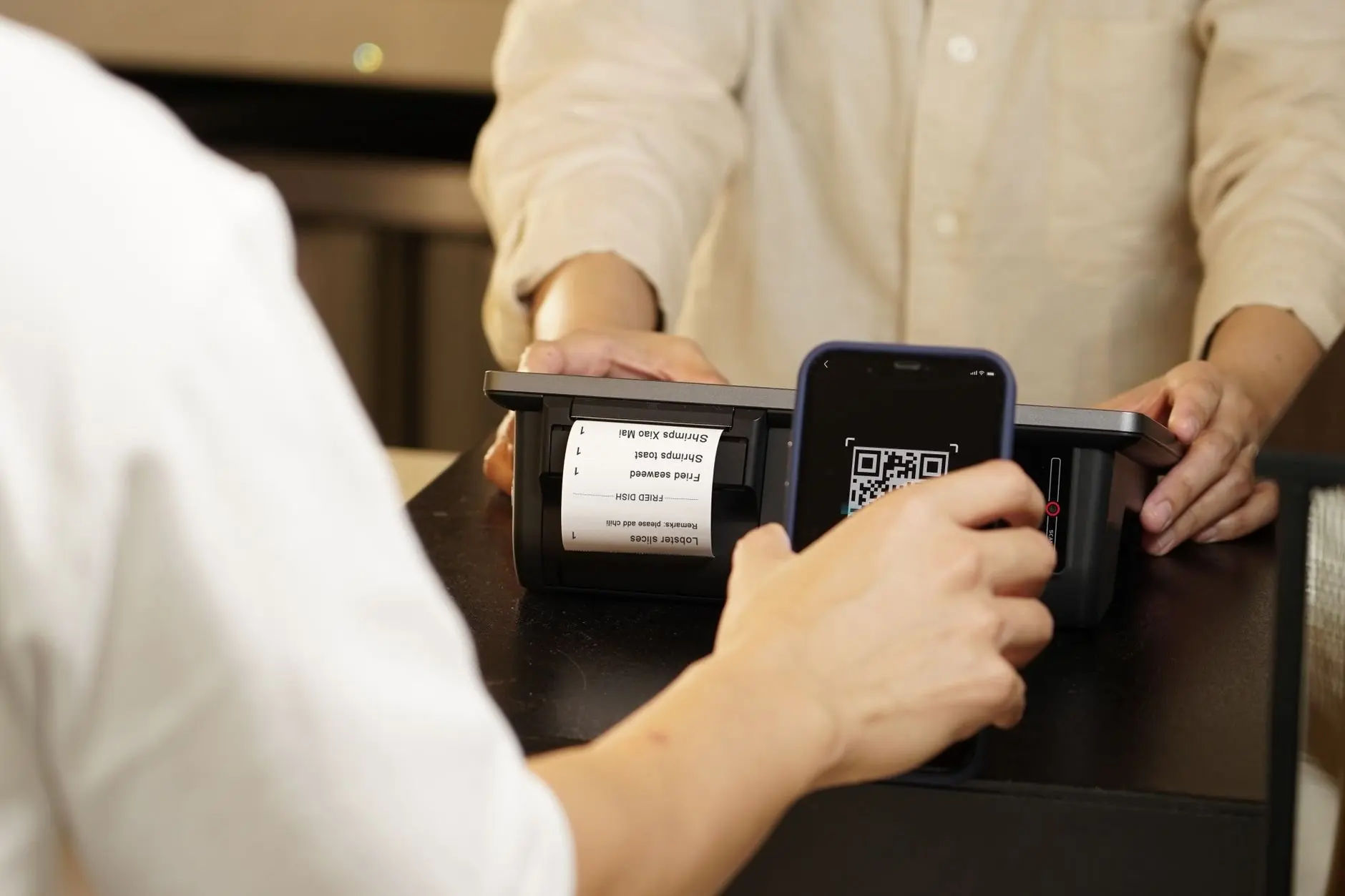
The retail counter shows the point well. A shop that lets customers pay by scanning a code has changed one step of its process, but the larger change comes when that payment data reaches stock and ordering decisions. The decision to ask is what the firm will do differently once the information arrives.

Stock photography like this illustrates the idea and does not document any particular retailer. The practical lesson is to begin at a visible customer step and trace what information it could release for the back office.
How company size changes the technology route
Company size and resources decide how much technology a firm can absorb at once. The same journal study notes that big companies have the potential and the resources to adopt Industry 4.0 technologies, and that small and medium-sized businesses still need to develop and innovate their business models in order to compete internationally. The implication is not that small firms should wait. It is that they should choose narrower projects that fit what they can staff and maintain.
The comparison below sets common technology routes against the decision each supports and the condition that should hold before committing.
| Route | Decision it supports | Suits | Check before committing | Planning use |
|---|---|---|---|---|
| Task and workflow automation | Which repeatable process should stop consuming staff time | Firms of any size with stable, rule-based processes | The process is already understood and documented | Start here when the pain is volume or delay |
| AI and machine learning | Where prediction or language handling would improve a decision or service | Firms with usable records and a clearly framed question | The output will be reviewed by a person who owns the result | Pilot narrowly and widen only after review |
| Off-the-shelf software | Whether a standard product already covers the need | Smaller teams and common business functions | The product fits the process, rather than forcing the process to fit it | Default choice for functions that are not a point of difference |
| Custom build | Whether a capability is central enough to own | Larger firms, or any firm whose edge depends on the software | Skills and maintenance capacity exist in-house or by contract | Reserve for what customers actually pay for |
| Partnering with specialist firms | How to reach outside expertise without building a department | Firms whose in-house resources are limited | Ownership of data and results is agreed in advance | Use where speed or skill is the gap |
The size and resource point comes from the European Research Studies Journal study, and the advice to test systems against a business need rather than technical performance alone comes from CIO’s innovation guidance.
One caution applies to the study itself. Its stated method is theoretical analysis and a literature study, so it supports the direction of the argument, that size and resources matter, rather than any measured adoption rate. Treat it as a framework for asking better questions and gather the firm’s own numbers before setting targets.
Automation: removing repeatable work
Automation supports one decision above all: which work should stop depending on a person’s attention. Good candidates are tasks with clear rules, steady volume and an obvious owner. Poor candidates are tasks that change every time or rely on judgement that nobody has written down.
The broad field is covered in the guide to business process automation, which suits readers deciding between several candidate processes. A narrower route is software that imitates what a person does on screen, explained under what is robotic process automation. Choose that narrower route when the systems involved cannot easily be changed and the work is a repeatable sequence of clicks and entries.
Pick the process before the product
Automation fails most often when it is applied to a process nobody has examined. Walk through the work as it is actually done, including the exceptions staff handle without noticing. If the exceptions outnumber the standard cases, simplify the process first and automate afterwards.
Keep people in the loop where judgement matters
Automating a step does not remove accountability for its result. Assign a named owner to each automated process and decide in advance who reviews errors and how they are corrected. This is a business-context test of the kind CIO describes: the system is judged by whether the process still meets its need, not by whether the software behaves as designed.
AI and machine learning for smaller teams
Small businesses can adopt AI by treating it as a tool for one defined decision rather than a company-wide programme. The research on firm size points the same way. If large firms hold the resources to adopt broad technology programmes, as the journal study says, smaller firms gain more by choosing a narrow use that fits their means and tying it to a business-model improvement they need in order to compete.
A workable order is to pick the decision, check that relevant records exist, try a ready-made service before commissioning anything bespoke, and keep a person responsible for acting on the output. The guide to machine learning for business explains where prediction from data fits, and generative ai for business covers tools that draft text and other content.
Customer service as a contained first use
Customer enquiries are a common first test because the questions repeat and the result is easy to observe. The comparison of ai chatbots for customer service helps a firm decide whether a automated assistant fits its enquiry mix. Set a clear route to a human for anything the assistant cannot settle, and read the failed conversations as a source of product and process feedback.
Data as the raw material
AI output is only as useful as the records behind it. Before choosing a model, find out where the relevant data lives, who keeps it accurate and whether the firm is allowed to use it for the new purpose. The overview of how companies use big data shows how larger collections change what analysis is possible. A smaller firm often gets more value from tidying the records it already has than from collecting more.
Build, buy or partner for software
Companies choose between building and buying software by asking whether the capability is part of what customers pay for. If it is, ownership and control justify the cost of building. If it is a common function such as accounting or scheduling, a bought product usually serves the need and frees the team to work on what distinguishes the firm.
CIO’s innovation guidance adds a second test that applies to both routes: the system must meet a business need, not only pass technical tests. A product that meets every item on a feature checklist can still fail if staff find it unworkable, and a bespoke build can still fail if it solves the wrong problem.
The case for buying
Buying suits functions that every competitor needs and none uses to stand out. It also suits teams without developers, since a vendor carries the engineering. The cost to weigh is fit: a product may force the business to change a process that was working. Run the shortlisted product against real tasks from the firm’s own work rather than a vendor’s scripted demonstration.
The case for building
Building suits a capability the firm wants to control and keep improving. It demands people who can maintain the software after launch, so plan for that capacity before approving the project. Where code is shared openly, open source software for business offers a middle path between buying a closed product and writing everything from nothing.

The case for partnering
CIO’s 2006 article observed that a swarm of small, global companies had moved in to take the place of big, internal corporate R&D departments. For a firm with limited in-house resources, the lesson still holds as a sourcing option: specialist outside firms can supply expertise that would be costly to build internally. Agree up front who owns the data and the results, and keep enough internal understanding to judge the partner’s work.
When the old system is the constraint
Sometimes the real choice is between living with an existing system and replacing it. The guide to legacy system modernization sets out the approaches. Decide which functions the business cannot lose, and prefer changes that can be reversed over a single large switch.
Cloud infrastructure as a sourcing decision
Moving to cloud services is a decision about where systems run and who maintains them. The question for a business is not whether cloud is modern but which responsibilities it wants to keep in-house. Handing infrastructure to a provider frees staff time, while the firm remains accountable for its data and for how staff use the service.

Treat the cloud choice as part of the wider sourcing logic above. A function that is not a point of difference can run on a provider’s service. A function that is central to the firm’s offer deserves closer control, and the decision should be revisited as the business changes. Link the choice to the transformation plan so that infrastructure follows business goals rather than leading them.
Digital twins, augmented reality and other emerging tools
Emerging technologies earn attention only when a specific decision depends on them. A digital twin, a virtual model of a physical asset or process, supports decisions about testing changes without disturbing live operations. The explainer on what is a digital twin suits firms with equipment or processes complex enough to justify modelling. For training, remote support and product visualisation, augmented reality in business shows where overlays and immersive tools fit.
To judge when to move, use the technology adoption lifecycle, which helps a firm decide whether to be an early adopter or to wait until a tool matures. Early adoption can suit a firm that can absorb setbacks and that gains an advantage if the tool works. Waiting suits a firm whose margin for failed experiments is thin. A running overview of emerging technologies in business helps with the watching.
Whichever tool is under consideration, apply the same filter used throughout: name the decision it supports, check that the business need is real, and run a pilot narrow enough to stop.
Security and network foundations
Every technology above rests on networks and systems that must be kept working and protected. Security belongs in the project plan from the start, since an automation, AI service or cloud move adds new connections and new data flows that someone has to look after. Assign ownership for it as clearly as for the project itself.

For firms without a dedicated IT team, the practical choice is between building a small internal capability and contracting the work out. The same sourcing logic applies as for software. Keep what is central, and buy or partner for the rest, while making sure someone inside the firm understands enough to question what the provider reports.
Organising innovation as a team practice
Technology produces innovation when someone is responsible for pursuing it. CIO’s guidance argues that innovation arising during projects or daily business is accidental, and that a dedicated team makes it purposeful. In a small firm that team may be a single person with protected time and a clear remit, rather than a department.
Give the team a business remit
An innovation team that reports on technology alone will drift toward interesting tools. A remit framed around customer problems, costs or delays keeps its work tied to the firm. Ask it to bring forward proposals that name the decision they support and the check that would show the idea has failed.
Review pilots against the original need
At the end of each pilot, compare the result with the need written down at the start. If the technology worked but the need was not met, record that outcome plainly and change course. This habit protects the firm from the failure CIO describes, where systems work well and still fall short of the business need.
Keep evidence of size and resources in view
The journal study’s central point, that impact varies by enterprise size and resources, is a reminder to size each project to the firm. Ambition is welcome, but a project that outruns the team’s capacity to maintain it will leave the firm with another system nobody owns.
Frequently asked questions
| Question | Answer |
|---|---|
| What is digital transformation in business? | It is the use of digital technology to change how a company operates and serves customers. Success shows in a changed process or offer, not in the purchase of software. |
| How can small businesses adopt AI? | Pick a single decision, use records the firm already holds, and keep a person accountable for the output. Small and medium-sized firms still need to innovate their business models to compete, according to the journal study, so the pilot should serve that aim. |
| How do companies choose between building and buying software? | They ask whether the capability is central to what customers pay for. Build for what differentiates, buy for common functions, and test either choice against a real business need. |
| Does company size change which technology to adopt? | Yes. The study in the European Research Studies Journal links the impact of Industry 4.0 technologies to enterprise size and resources, and large firms are better placed to adopt them broadly. |